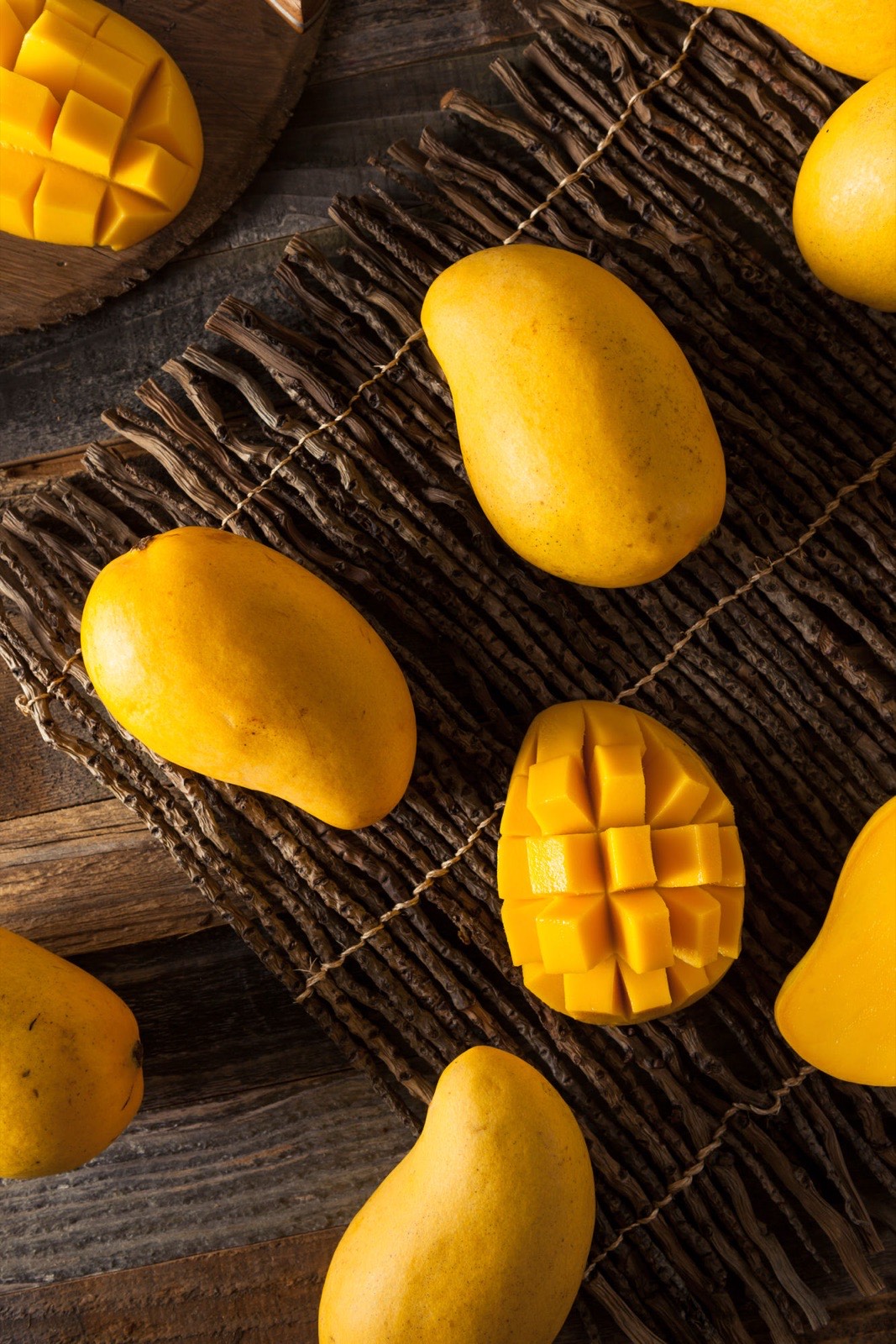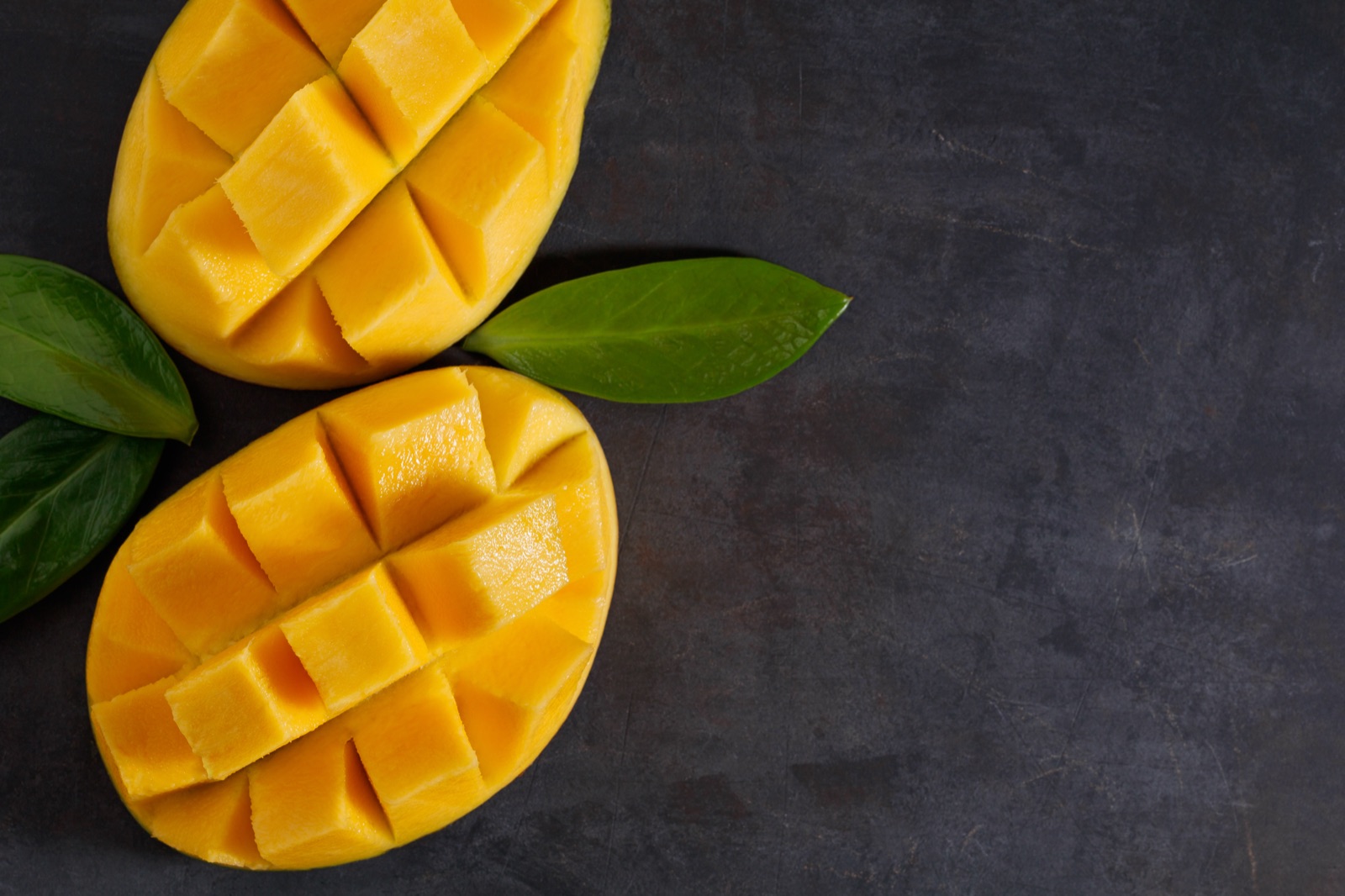
The Kesar is the mango that earns its name the moment you cut one open: the flesh is the deep saffron-orange of kesar itself, and the aroma that rises is unmistakably floral. Grown in the foothills of the Gir forest in Gujarat, it is the second most-prized mango in India after the Alphonso — and to many eaters, the more interesting of the two.
If you want the perfume of a premium mango without the sharp acidity that sometimes edges an Alphonso, the Kesar is your variety.
A short biography
The Kesar's home is the Gir–Junagadh belt of Saurashtra, where the variety was first cultivated in the early twentieth century around the Vanthali region. The fruit grown in the specific agro-climatic zone around Gir carries a GI tag — "Gir Kesar" — recognising the way the region's soil and dry heat concentrate the variety's aroma.
A typical Kesar is small to medium — 150 to 250 grams — with a rounded shape, a slight beak at the tip, and a skin that stays greenish-yellow even when fully ripe (so do not judge a Kesar by its outside). The give-away is the smell: a ripe Kesar perfumes a room.
It ripens through May, overlapping the Alphonso but holding on a little later, and reaches Bengaluru households as the mid-season fills out.
Why people seek it out
The Alphonso gets the marketing; the Kesar gets the loyalty. Its sweetness is high but carried on a softer, less resinous acidity, which makes it the preferred mango for two specific Gujarati preparations that have travelled across India:
- Aamras — the smooth Kesar pulp blends to a silken purée with almost no fibre to strain out.
- Shrikhand and mango lassi — the saffron note survives mixing with curd and sugar, where lighter varieties get lost.
A Kesar does not announce itself by colour. It announces itself by scent.
What it tastes like
The first impression is aroma — floral and honeyed, with the faint saffron-resin note that gives the variety its name. The flavour follows sweet and round, with just enough acidity to keep it from cloying. The pulp is smooth and firm rather than soft and dripping, which makes the Kesar a clean mango to eat in slices as well as to pulp.
It is the right mango for:
- Eating fresh in slices. Firm flesh holds a clean cut; the aroma fills the plate.
- Aamras and shrikhand. The fibreless pulp and saffron note are made for it.
It is not the messiest summer mango — for that, Raspuri is the variety. The Kesar is the one you reach for when you want fragrance and finesse.
When to buy Kesar
Three notes for the 2026 buyer:
- Order through May. The first Kesar boxes appear in mid-April and the variety peaks around mid-May. Quality is highest in the four weeks either side of peak.
- Ripen by smell, not by colour. A Kesar can be fully ripe while still looking green. Let it sit at room temperature until it perfumes the room, then eat or refrigerate.
- It is priced as a premium variety, fixed for the season. No haggling, no surge — one rate per kilo, and box sizes that bring the per-kilo cost down as they go up.